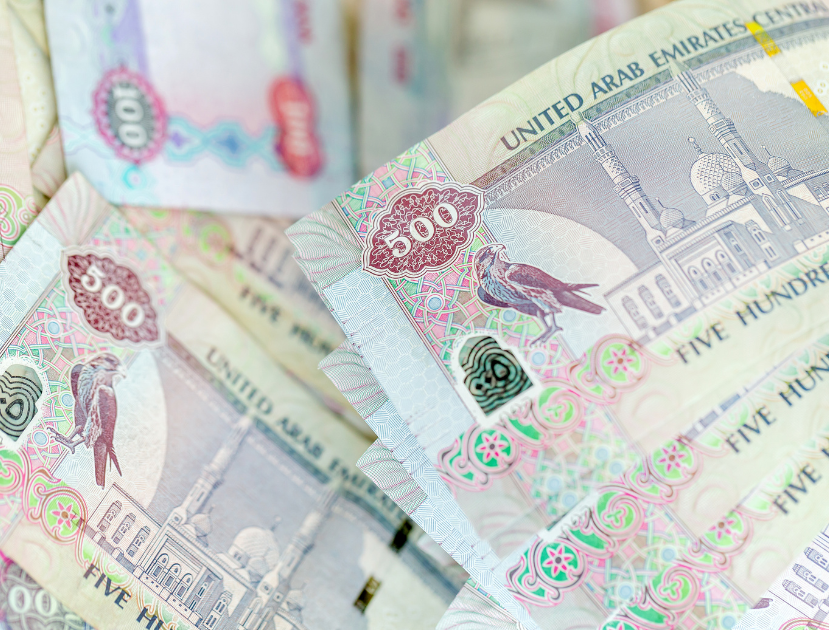
Remit Money from UAE
Remit money from UAE at a moment when two of the region’s most-watched currency pairs are moving in the same direction. Through much of 2026, both the Indian rupee and the Philippine peso have lost ground against the UAE dirham, and that combination has put a fresh spotlight on remittance timing for the millions of Indian and Filipino residents living and working across the Emirates. Whether this is genuinely “the” moment to send funds home, or simply one good window among several, depends on where the rupee and peso are headed next, and on how each individual sender’s needs line up with the market.
Why the Dirham Has Stayed Firm Through 2026
The dirham’s strength this year is not really a story about the dirham itself. Because the UAE currency has been pegged to the US dollar since 1997, its value against other currencies moves largely in step with the dollar’s own performance. When the dollar firms up against a basket of emerging-market currencies, the dirham automatically firms up alongside it, without the Central Bank of the UAE needing to intervene. During periods of geopolitical uncertainty, investors often shift capital into safe-haven assets such as the US dollar, and because the dirham is pegged to the dollar, this can indirectly push the dirham higher against currencies like the Indian rupee. Regional tensions have also played a part, with disruptions around the Strait of Hormuz contributing to a sharp spike in oil prices earlier in 2026. That combination of dollar strength and regional risk has been a recurring theme behind the dirham’s relative firmness this year.
The Indian Rupee’s Slide and What It Means for Remit Money From UAE
For the UAE’s Indian community, the AED to INR rate is the number that matters most, and 2026 has delivered a string of milestones on that front. As of late September 2026, one dirham buys a little over 26 rupees, with live quotes hovering around the 26.10 to 26.14 mark. Over the past week, the pair moved between roughly 26.05 and 26.17, and over the past month it ranged between about 25.72 and 26.17, which shows a currency pair that has been drifting steadily upward rather than spiking on a single news event. Looking back over the year, the rate climbed from an average of around 25.30 in March to a 2026 high near 26.40 in May, before easing slightly through June and settling around 25.97 in July.
The reasons behind the rupee’s underperformance are fairly well understood by currency watchers. Analysts point to a steep US tariff overhang, a spike in oil prices, and sustained outflows of foreign portfolio investment as the main forces weighing on the rupee through much of 2026. India is a large net importer of oil, so any sustained rise in crude prices tends to widen its trade deficit and put additional pressure on the currency. Combined with global investors pulling money out of emerging markets when uncertainty rises, this has created a fairly persistent headwind for the rupee rather than a one-off dip. Forecasts for the final months of 2026 suggest the pair could stay volatile in a broad range through the fourth quarter, with some models pointing toward levels near 26.4 to 26.9 by year-end, though currency forecasting is inherently uncertain and actual outcomes will depend on how oil prices, US trade policy and Indian capital flows evolve.
The Philippine Peso Mirrors the Rupee’s Weakness
The Filipino community in the UAE has watched a broadly similar pattern unfold with the peso this year. The AED to PHP rate has moved through a wide band in 2026, at various points trading in the mid-15s and pushing above 16.5 to 16.8 pesos per dirham, a noticeably softer peso than the levels seen for much of 2025. While short-term swings have gone in both directions, the broader tone through the year has favoured the dirham, meaning remitters converting AED into PHP have generally been able to secure more pesos per dirham than they would have a year earlier.
What Is Pressuring the Peso
The peso’s softness shares some of the same root causes as the rupee’s. A firmer US dollar, elevated global oil prices that raise the Philippines’ import bill, and cautious investor sentiment toward emerging Asian markets have all played a part. The Philippines, like India, imports the bulk of its energy needs, so any sustained rise in oil prices tends to widen its current account gap and put downward pressure on the currency. Domestic factors, including the pace of local interest rate policy and remittance inflows from overseas Filipino workers, also continue to shape the peso’s day-to-day movements, but the dominant story in 2026 has been one of a currency struggling to keep pace with a resilient, dollar-pegged dirham.
What a Stronger Dirham Means for Money Transfers From the UAE
For anyone sending money from the UAE to India or the Philippines, a stronger dirham is, in the simplest terms, good news. Every dirham converts into more rupees or more pesos than it would have a year ago, which means a fixed monthly remittance for school fees, a home loan instalment, or family support now stretches further on the receiving end. Businesses that pay suppliers or contractors in India or the Philippines, and UAE-based investors funding property or education costs back home, are seeing the same effect play out in their own transactions.
This dynamic also feeds into behaviour at exchange houses and banks across the UAE, where remittance volumes tend to pick up whenever the rupee or peso weakens meaningfully. Anecdotally, exchange centres in Dubai, Abu Dhabi and Sharjah often report busier counters and higher transaction volumes during periods when the AED to INR or AED to PHP rate touches a multi-month high, as residents try to take advantage of the more favourable conversion before rates potentially reverse.
Is This Really the Right Time to Remit?
Weighing the Case for Remitting Now
There is a reasonable argument for remitting sooner rather than later. Currency markets are unpredictable, and nobody can say with certainty whether the rupee or peso will weaken further, hold steady, or recover some ground in the coming weeks. For senders with a fixed obligation, such as a tuition payment, a loan EMI, or a family expense that needs to be met on a set date, locking in today’s favourable rate removes the uncertainty of waiting and potentially converting at a less advantageous level later.
Risks and Considerations Before You Transfer
At the same time, chasing the “perfect” rate is rarely a sound financial strategy on its own. Exchange rates move on short notice in response to central bank decisions, oil price shifts, or global risk sentiment, and a currency that looks weak today can firm up within days. Anyone planning a large, one-off transfer, such as funding a property purchase or a major investment back home, may benefit from spreading the transfer across a few tranches rather than converting the entire amount at once, which reduces the risk of getting the timing badly wrong. It is also worth comparing the rates and fees offered by different UAE exchange houses, banks and digital remittance platforms, since the spread between providers can sometimes matter as much as the day-to-day market movement itself.
Outlook for the Rest of 2026
Barring a sharp reversal in oil prices or a significant shift in US monetary policy, the conditions that have supported the dirham against the rupee and peso through most of 2026 look likely to persist into the final quarter of the year. That said, currency forecasting always carries a wide margin of error, and factors such as India’s and the Philippines’ central bank policies, festive-season remittance demand, and global trade developments could all nudge the rupee or peso in either direction over the coming months. UAE residents planning significant transfers home would do well to keep an eye on rate movements over the next few weeks rather than assuming today’s levels are guaranteed to hold.
How My Taxman Can Help With Your Financial Planning
Currency timing is only one part of a much bigger financial picture, and this is where My Taxman can add real value for UAE residents managing money across borders. My Taxman works with individuals and businesses in the UAE on tax planning, corporate tax compliance, VAT matters, and broader financial advisory needs, helping clients understand how remittances, foreign income, and cross-border transactions fit into their overall tax and compliance position. For residents weighing up whether to remit a large sum now or structure transfers over time, having a clear picture of any tax implications in both the UAE and the recipient country is just as important as getting the exchange rate right. My Taxman’s team can help review remittance patterns, advise on record-keeping for larger transfers, and ensure that financial decisions made today, including how and when money is sent home, are aligned with sound long-term tax and financial planning rather than short-term currency movements alone.