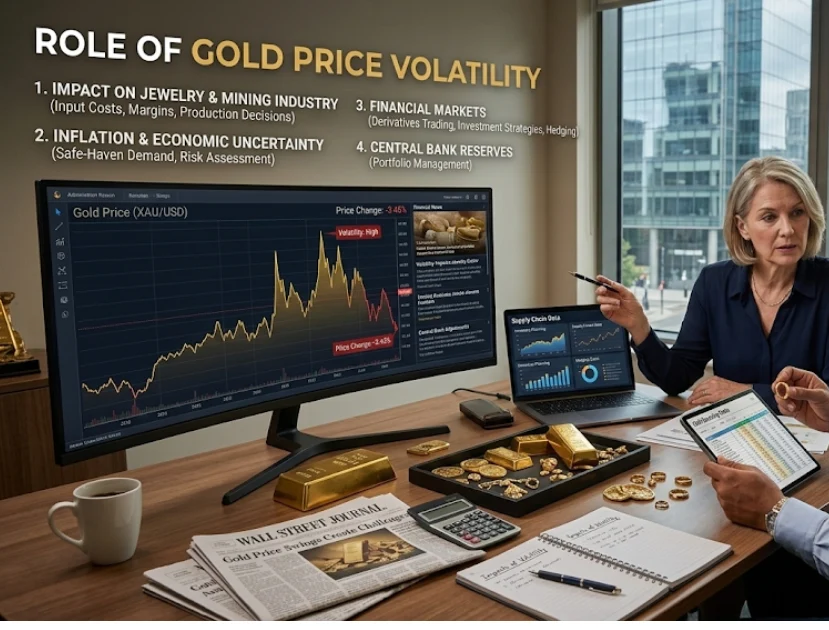
Gold Price Volatility has once again captured the attention of global investors as geopolitical tensions and currency movements shake financial markets. Traditionally considered a safe-haven asset, gold often reacts strongly during periods of uncertainty. However, recent developments show that the precious metal is experiencing sharp swings instead of a steady rise.
The combination of escalating war tensions across regions and a strengthening US dollar has created a complex environment for gold prices. Investors are trying to balance risk, inflation concerns, and currency fluctuations while deciding whether gold remains the best hedge against uncertainty. Understanding the forces behind gold’s recent movements helps investors make informed financial decisions.
Understanding the Recent Surge in Gold Price Volatility
In recent months, global markets have witnessed dramatic movements in gold prices. One day prices rise sharply as investors rush toward safe assets, and the next day they decline as the US dollar gains strength.
This phenomenon reflects the interconnected nature of the global economy. Gold does not move in isolation; it reacts to macroeconomic indicators such as interest rates, inflation expectations, currency movements, and geopolitical risks. When war tensions increase, investors often move funds away from risky assets like stocks into commodities such as gold.
However, a stronger dollar creates an opposing force. Since gold is priced globally in US dollars, a stronger currency makes gold more expensive for international buyers. This often reduces demand, putting downward pressure on prices.
The result is a market where gold prices fluctuate rapidly, creating both opportunities and risks for investors.
The Role of War Tensions in Driving Gold Demand
Geopolitical Conflicts and Safe-Haven Assets
Throughout history, gold has been regarded as a reliable store of value during uncertain times. When conflicts escalate or geopolitical tensions rise, investors seek assets that can preserve wealth.
Recent global conflicts and diplomatic tensions have triggered fear among investors. Uncertainty about trade routes, supply chains, and political stability encourages investors to protect their wealth by purchasing gold. This sudden demand often pushes gold prices higher.
Financial markets respond quickly to geopolitical news. Even rumors of potential conflicts or sanctions can trigger immediate buying in gold markets. As a result, prices can spike within hours of major announcements.
Psychological Impact on Investors
Investor psychology plays a major role in gold price movements. During periods of conflict, fear becomes a powerful market driver. Investors prioritize security over high returns, and gold becomes an attractive option because of its historical reliability.
However, these emotional reactions can also lead to sudden price corrections when tensions ease or when investors shift their focus to other economic indicators.
How a Strong Dollar Influences Gold Prices
The Inverse Relationship Between Gold and the Dollar
One of the most important factors influencing gold prices is the strength of the US dollar. The relationship between gold and the dollar is often inverse. When the dollar strengthens, gold prices tend to fall, and when the dollar weakens, gold prices usually rise.
A strong dollar attracts global investors to US assets such as Treasury bonds and equities. This reduces demand for gold as a protective asset. Additionally, international buyers must spend more in their local currencies to purchase gold when the dollar strengthens.
This dynamic creates significant pressure on gold prices, even during periods of geopolitical instability.
Interest Rates and Monetary Policy
Central bank policies also influence both the dollar and gold markets. When interest rates increase, investors often move toward interest-bearing assets such as bonds instead of gold, which does not generate yield.
Higher interest rates also strengthen the US dollar, further reducing gold demand. This double effect can cause gold prices to decline even when other factors suggest they should rise.
Inflation, Uncertainty, and Gold’s Traditional Role
Gold as a Hedge Against Inflation
Gold has long been used as a hedge against inflation. When the purchasing power of currencies declines, investors turn to gold to preserve wealth.
Rising inflation levels in many economies have historically pushed gold prices upward. Investors view gold as protection against the erosion of their savings. However, when central banks aggressively raise interest rates to control inflation, gold can face downward pressure.
Economic Slowdown Concerns
Economic slowdown fears also play a role in gold demand. When investors anticipate recession or weak economic growth, they often shift toward safe assets. Gold benefits from this trend, but again the effect may be limited if the US dollar remains strong.
Global Market Reactions to Gold’s Sharp Movements
Stock Markets and Commodity Markets
The volatility in gold prices often reflects broader instability across financial markets. Stock markets tend to react negatively to geopolitical tensions, which can increase demand for safe-haven assets.
Commodity markets also react to global conflicts, especially those involving major energy-producing regions. Rising oil prices can increase inflation expectations, indirectly supporting gold demand.
Investor Strategies During Volatility
During volatile periods, investors adopt different strategies. Some view price dips as buying opportunities, expecting gold to rise in the long term. Others prefer short-term trading, taking advantage of price swings.
Institutional investors often diversify their portfolios by maintaining a certain allocation to gold, ensuring protection against extreme market events.
What Gold Price Volatility Means for Investors
Long-Term vs Short-Term Perspectives
For long-term investors, gold remains an important diversification tool. Its ability to preserve value during crises makes it a valuable component of a balanced portfolio.
Short-term traders, however, must carefully monitor economic indicators, currency movements, and geopolitical developments. Rapid price swings can lead to both significant profits and losses.
Risk Management in Precious Metal Investments
Investors should avoid relying solely on gold as a protective asset. Diversification across multiple asset classes, including equities, bonds, and commodities, can reduce overall risk.
Monitoring central bank policies, inflation data, and global political developments can also help investors anticipate potential gold price movements.
The Future Outlook for Gold Prices
Predicting gold prices is challenging because many factors influence the market simultaneously. If geopolitical tensions continue to escalate, gold demand could increase significantly.
However, if the US dollar remains strong due to high interest rates and stable economic growth, gold may struggle to maintain upward momentum.
In the coming months, investors will closely watch central bank decisions, inflation trends, and geopolitical developments. These factors will determine whether gold continues to experience volatility or stabilizes at higher levels.
Regardless of short-term fluctuations, gold’s historical role as a safe-haven asset ensures that it will remain an important part of global financial markets.
About My Taxman
My Taxman is a trusted financial and taxation advisory platform dedicated to simplifying complex financial matters for individuals and businesses. The platform offers expert guidance on income tax filing, financial planning, and regulatory requirements.
With a team of experienced professionals, My Taxman focuses on helping clients make informed financial decisions while ensuring compliance with evolving tax regulations. Whether you are an individual taxpayer, a small business owner, or an investor, My Taxman provides reliable support to manage your finances efficiently and confidently.
FAQS for Gold Price Volatility
Why do Gold Prices Increase during Geopolitical Conflicts?
Gold prices often rise during geopolitical conflicts because investors view gold as a safe-haven asset. When political instability, war tensions, or global uncertainty increase, investors move their money away from risky investments like stocks and toward stable assets like gold. This increased demand pushes prices higher. Gold has historically maintained its value during crises, making it attractive for wealth preservation. However, other factors like currency strength and interest rates can influence whether gold prices rise significantly during such periods.
How does the US Dollar Affect Gold Prices?
Gold and the US dollar typically have an inverse relationship. When the US dollar strengthens, gold becomes more expensive for investors who use other currencies, reducing global demand. As demand falls, gold prices may decline. Conversely, when the dollar weakens, gold becomes cheaper for international buyers, increasing demand and pushing prices upward. Because gold is globally traded in dollars, fluctuations in the currency play a major role in determining gold’s price movements in international markets.
Is Gold Still a Safe Investment During Economic Uncertainty?
Gold remains one of the most trusted safe-haven investments during economic uncertainty. Investors often use gold to protect their wealth against inflation, currency depreciation, and financial market instability. While gold prices may fluctuate in the short term, its long-term track record of preserving value makes it an important asset in diversified investment portfolios. However, investors should avoid relying solely on gold and instead maintain a balanced mix of assets to manage risk effectively.
Why does Gold Sometimes Fall Even During Global Conflicts?
Although geopolitical tensions usually increase gold demand, other economic factors can counteract this effect. For example, if the US dollar strengthens significantly or interest rates rise, investors may prefer interest-bearing assets instead of gold. Higher interest rates increase the opportunity cost of holding gold because it does not generate income like bonds or savings accounts. As a result, gold prices may decline even when geopolitical tensions remain high.
How do Interest Rates Influence Gold Prices?
Interest rates play a major role in determining gold prices. When central banks raise interest rates, investors often shift their funds toward assets that generate returns, such as bonds or savings accounts. Since gold does not produce interest or dividends, higher interest rates can reduce its attractiveness. Additionally, rising interest rates usually strengthen the US dollar, which further pressures gold prices downward. Conversely, lower interest rates often support higher gold prices.
Should Beginners Invest in Gold During Volatile Markets?
Beginners can consider investing in gold during volatile markets, but it should be done carefully. Gold can act as a hedge against uncertainty and inflation, helping protect wealth during market downturns. However, it is important not to invest all funds in gold. Beginners should diversify their portfolios across different asset classes such as stocks, bonds, and commodities. Consulting a financial advisor and understanding market conditions can help new investors make smarter decisions.
What Factors Besides War and Currency Affect Gold Prices?
Several factors influence gold prices beyond geopolitical tensions and currency movements. These include inflation rates, central bank policies, global economic growth, supply and demand in the jewelry and technology industries, and investor sentiment. Large purchases by central banks or investment funds can also drive prices higher. Because gold markets respond to multiple economic indicators simultaneously, price movements can sometimes appear unpredictable.