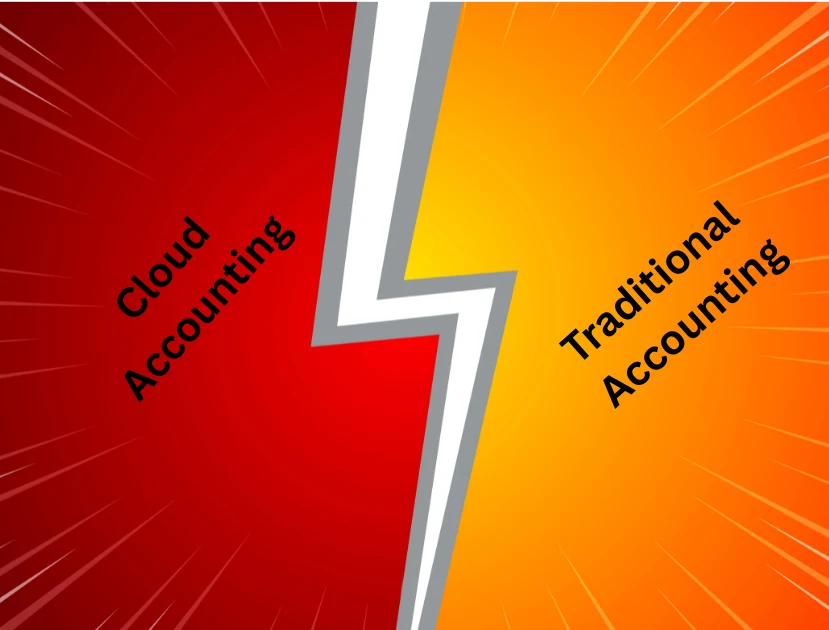
Cloud Accounting vs Traditional Accounting is one of the most important discussions for businesses today, especially in a rapidly digitizing world. Accounting is the backbone of any business, and the method you choose can directly impact efficiency, accuracy, and decision-making. While traditional accounting has been around for decades, cloud accounting is transforming how financial data is managed.
In this blog, we will explore both approaches in depth, compare their advantages and limitations, and help you decide which one suits your business needs best.
What is Traditional Accounting?
Traditional accounting refers to the conventional method of managing financial records manually or using desktop-based software. In this system, financial data is typically stored on a local computer or physical files.
How It Works
Traditional accounting relies heavily on manual data entry, spreadsheets, and offline software. Businesses often maintain physical ledgers or use installed accounting programs that do not require internet access.
Key Characteristics
Traditional accounting systems are usually installed on a single device, making data access limited. Updates are done manually, and collaboration requires physical presence or file sharing through external devices.
What is Cloud Accounting?
Cloud accounting is a modern approach where financial data is stored and managed on remote servers accessed through the internet. This allows businesses to access their financial information anytime and anywhere.
How It Works
Cloud accounting software operates through web-based platforms. Users log in using credentials and manage accounts in real time. Data is automatically saved and backed up on secure servers.
Key Characteristics
Cloud accounting provides real-time access, automatic updates, and seamless collaboration. It eliminates the need for physical storage and offers high scalability.
Cloud Accounting vs Traditional Accounting: Key Differences
Accessibility and Flexibility
One of the biggest differences between cloud accounting and traditional accounting is accessibility. Traditional accounting restricts access to a specific device, while cloud accounting allows access from anywhere with an internet connection.
Cloud accounting is ideal for businesses with remote teams or multiple locations, whereas traditional accounting works best for small setups with limited users.
Data Security
Traditional accounting systems are vulnerable to data loss due to hardware failure, theft, or physical damage. Backups must be created manually, which increases the risk of human error.
Cloud accounting, on the other hand, uses advanced encryption and automatic backups. While some users worry about online security, most cloud providers offer strong protection against cyber threats.
Cost Efficiency
Traditional accounting often involves higher upfront costs, including software installation, hardware, and maintenance. Over time, these costs can add up.
Cloud accounting operates on a subscription basis, making it more affordable for small and medium-sized businesses. It reduces the need for IT infrastructure and maintenance.
Collaboration
Collaboration is limited in traditional accounting systems, as multiple users cannot easily access the same data simultaneously.
Cloud accounting allows real-time collaboration. Accountants, business owners, and teams can work together on the same data without delays.
Updates and Maintenance
Traditional accounting software requires manual updates, which can be time-consuming and costly.
Cloud accounting systems update automatically, ensuring users always have access to the latest features and compliance standards.
Advantages of Cloud Accounting
Real-Time Financial Insights
Cloud accounting provides instant access to financial data, helping businesses make informed decisions quickly.
Scalability
As your business grows, cloud accounting can easily adapt to increased data and user requirements without additional infrastructure.
Automation
Tasks like invoicing, payroll, and reporting can be automated, reducing manual effort and errors.
Improved Collaboration
Multiple users can access and work on the same data simultaneously, improving efficiency and communication.
Advantages of Traditional Accounting
Control Over Data
Some businesses prefer traditional accounting because it gives them full control over their data without relying on internet connectivity.
No Internet Dependency
Traditional accounting systems can function without an internet connection, making them suitable for areas with poor connectivity.
Familiarity
Many professionals are comfortable with traditional methods, making the transition to cloud systems challenging for some.
Challenges of Cloud Accounting
Despite its advantages, cloud accounting comes with certain challenges. Businesses may face concerns related to data privacy, subscription costs over time, and dependency on internet connectivity. Additionally, adopting new technology may require training and adjustment.
Challenges of Traditional Accounting
Traditional accounting can be time-consuming and prone to errors due to manual processes. It lacks flexibility, scalability, and real-time insights, making it less suitable for modern businesses.
Which One Should You Choose?
Choosing between cloud accounting and traditional accounting depends on your business size, budget, and operational needs.
If you are a growing business looking for flexibility, automation, and real-time insights, cloud accounting is the better choice. However, if your operations are small and you prefer offline systems, traditional accounting may still work for you.
Future of Accounting
The future clearly leans toward cloud accounting. With advancements in technology, businesses are increasingly adopting digital solutions for efficiency and accuracy. Cloud accounting is not just a trend but a necessity in today’s competitive landscape.
About My Taxman
My Taxman is a trusted platform dedicated to simplifying financial and taxation services for individuals and businesses. With a focus on innovation and accuracy, My Taxman offers expert solutions in accounting, tax filing, and compliance. Whether you are transitioning to cloud accounting or managing traditional systems, My Taxman provides reliable support to help you make informed financial decisions and grow your business with confidence.