Global Minimum Tax UAE
Global Minimum Tax UAE has become a critical compliance focus for multinational enterprises operating in the region as the country aligns with international tax standards through the Domestic Minimum Top-up Tax (DMTT) framework. The UAE Ministry of Finance officially implemented these rules effective January 1, 2025, marking a significant shift in the country’s corporate tax landscape for large businesses.
Understanding Pillar Two and the Global Minimum Tax UAE Framework
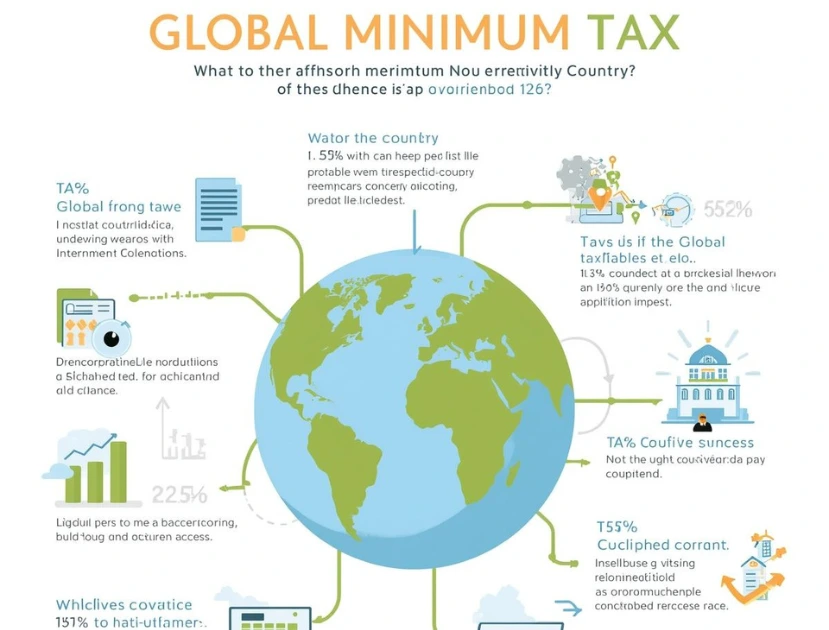
Pillar Two is an initiative developed by the OECD/G20 to establish a global minimum effective tax rate of 15% for multinational enterprises. The framework includes three main mechanisms: the Qualified Domestic Minimum Top-up Tax (QDMTT), the Income Inclusion Rule (IIR), and the Undertaxed Profits Rule (UTPR). The UAE has adopted the DMTT as its primary mechanism to ensure large multinational groups pay a minimum 15% effective tax rate on their UAE-sourced profits, preventing profit shifting to low-tax jurisdictions.
Who is Subject to UAE’s DMTT?
The DMTT applies exclusively to multinational enterprises with consolidated global revenues of €750 million or more in at least two of the four financial years immediately preceding the applicable tax year. Constituent entities that are members of such MNE groups operating in the UAE fall under the scope of these rules. Important exemptions include government entities, investment entities, non-profit organizations, and certain business structures based on their function and ownership composition.
How the DMTT Calculation Works
The effective tax rate (ETR) is calculated by dividing total taxes paid by profit before tax, then multiplying by 100. First, UAE corporate tax and any other applicable taxes are calculated under existing rules. The DMTT then assesses whether the overall effective tax rate on UAE profits reaches the 15% threshold. If the ETR falls below 15%, an additional top-up tax is charged in the UAE to bridge the gap between the actual rate and the minimum 15% rate. The calculation follows a jurisdictional basis, meaning profits and taxes of all in-scope UAE entities are assessed collectively.
Compliance and Registration Requirements
MNE groups subject to the DMTT must register with the Federal Tax Authority (FTA), though the exact deadline for registration is yet to be determined by the FTA. Entities must file a detailed DMTT return within 15 months from the end of the financial year, with an extended deadline of 18 months for the transitional first year. Groups may appoint a designated filing entity to handle compliance obligations on behalf of the group. Payment of any top-up tax liability is due along with the DMTT return submission.
Documentation and Record-Keeping Standards
Entities subject to DMTT must maintain comprehensive documentation including detailed records of group results and UAE-specific adjustments. Transfer pricing documentation becomes critical for demonstrating arm’s length pricing between related entities. Companies must also keep proof of eligible tax credits, foreign tax payments, and calculations supporting their effective tax rate determinations. The DMTT rules align closely with the OECD Global Anti-Base Erosion (GloBE) Model Rules, Administrative Guidance, and Commentary.
Strategic Implications for Businesses
The introduction of the 15% global minimum tax in the UAE ensures large multinationals pay their fair share regardless of where they operate. Companies that previously benefited from effective tax rates below 15% in the UAE will need to reassess their tax planning strategies and prepare for increased tax liabilities. MNE groups should already be testing their effective tax rate positions and preparing their data and reporting systems for the new compliance regime. This development underscores the UAE’s commitment to international tax standards while maintaining its position as a leading investment hub.
About My Taxman
Navigating the complexities of UAE’s Domestic Minimum Top-up Tax and Pillar Two compliance requires specialized expertise and proactive planning. My Taxman is your trusted partner for comprehensive tax consulting services in the UAE, offering expert guidance on DMTT registration, effective tax rate calculations, and compliance strategies for multinational enterprises. Our team of experienced tax professionals stays updated with the latest regulatory changes from the Ministry of Finance and Federal Tax Authority to ensure your business remains fully compliant with global minimum tax requirements. Whether you need assistance with DMTT return filing, transfer pricing documentation, or strategic tax planning, My Taxman delivers tailored solutions that protect your business interests while meeting all regulatory obligations. Contact us today to ensure your multinational enterprise is prepared for the new era of global tax compliance in the UAE.